Showing posts with label temperature quilt. Show all posts

Tuesday, February 15, 2022

2021 Temperatures Is Done


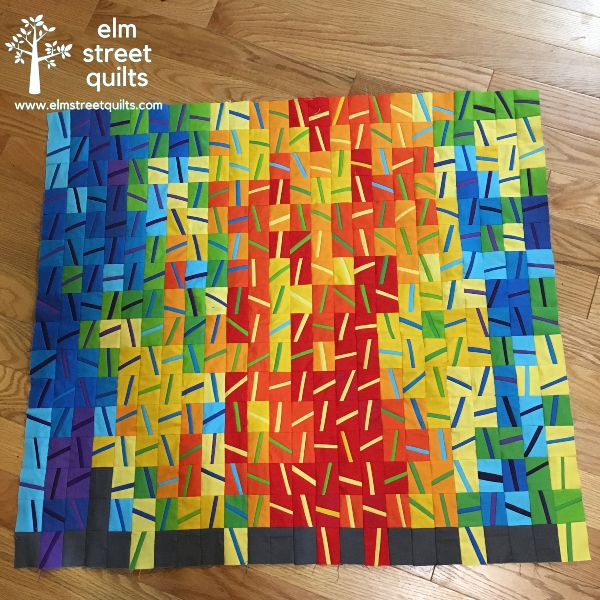
The final stitches went into the binding of my 2021 Temperature Quilt this weekend and I'm very excited about how it turned out!  My favorite part is the upper left corner - all those winter 'blues' are just so pretty together.
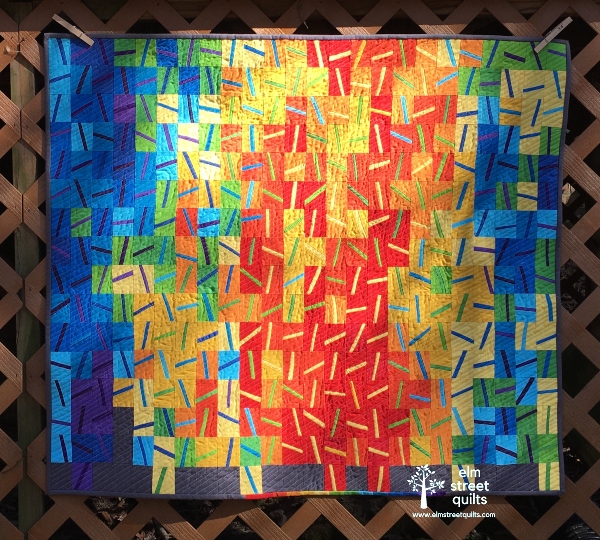

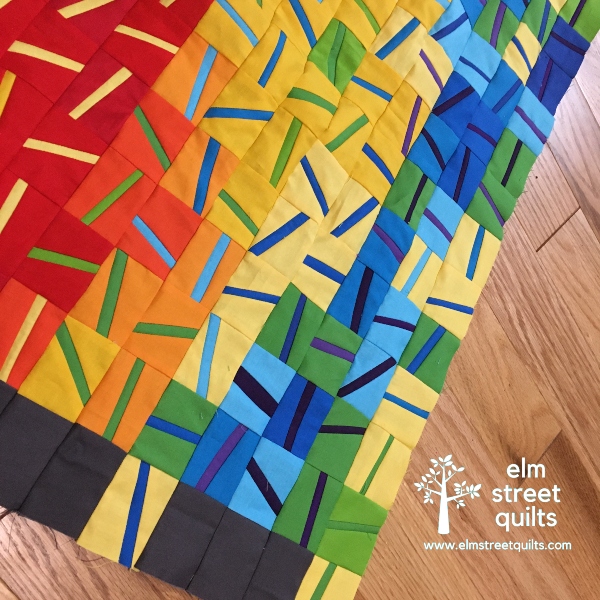
The quilting was done with a walking foot done at a 60 degree angle using a light gray thread.  I briefly considered using lots of different thread colors as I had on my 2020 quilt but decided to go with a simpler approach.  I also considered another round of quilting to make the spacing between lines even denser but decided it looked just fine the way it was.
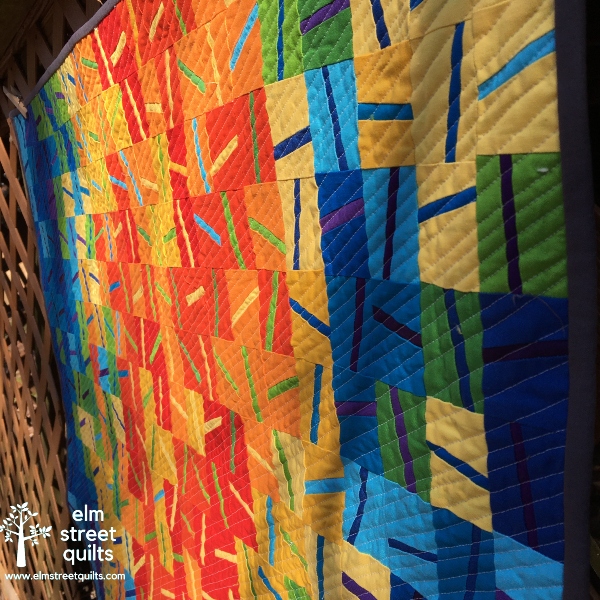

The temperature scale represented in fabric colors can be found as part of the binding.  The quilt is 36'' x 32".  

My 2021 design documents both the high and low temperature in a block which finishes 1 1/2 '' x 2''.  The improv strip is 1/4'' wide and records the low temperatures.  

Every month takes 2 columns - the 1 through 15 in first column and then 16 through end of month in the second column.  Filler blocks are added to square off the quilt.  The thin strips - 1/4'' wide - are randomly inserted and run 'vertically' for odd days and 'horizontally' for even days.
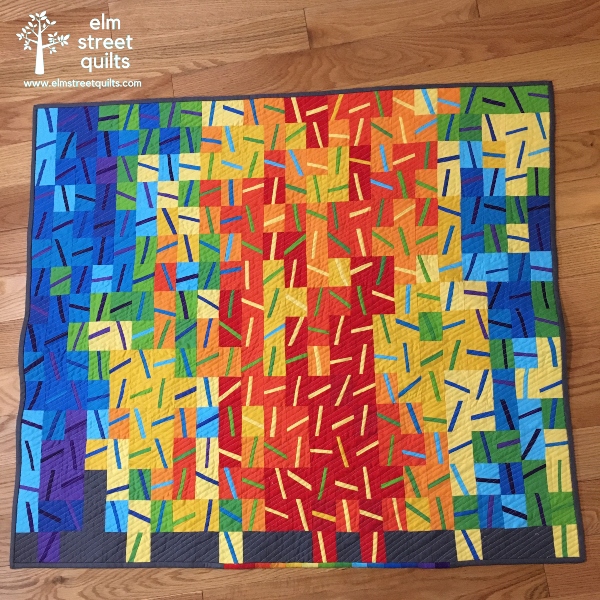

I plan to hang this quilt in my husband (the Atmospheric Scientist)'s home office where I can see it everyday.  My 2020 quilt (below) is hanging in my home office / sewing space. 


I'm using the exact same fabric that I did for my 2020 Temperature quilt.   I made myself a mini-quilt to show off my temperature grid.  Oranges are 80s, yellows are 70s and sew on.  The fabrics used are Painters Palette solids:
100+ is Sangria, 95+ is Real Red, 90+ is Poppy red, 85+ is Burnt Orange, 80+ is Tangerine, 75+ is Pencil Yellow, 70+ is Bright Yellow, 65+ is Apple Green, 60+ is Mint, 55+ is Bright Aqua, 50+ is Turquoise, 45+ is China Blue, 40+ is Lapis, 35+ is Purple, 30+ is Amethyst, and any temp is the 20s is Royalty.


I've written up my basic temperature quilt process in my tutorial including where I source the high and low information.  You can see my temperature quilts for 2018, 2019, and 2020!

Have a wonderful day! Patty

Monday, January 10, 2022

2021 Temperature Quilt Flimsy

And 2021 is a wrap!


There was such an amazing string of days at the end of December - which continued into the first 2 days of January - where we saw high temperatures in the 70s (yellow) and upper 60s (green).  The other amazing part is the lows were not all that low - look at those greens in the last 3 days of the year which means the low temperature was in the 60s!


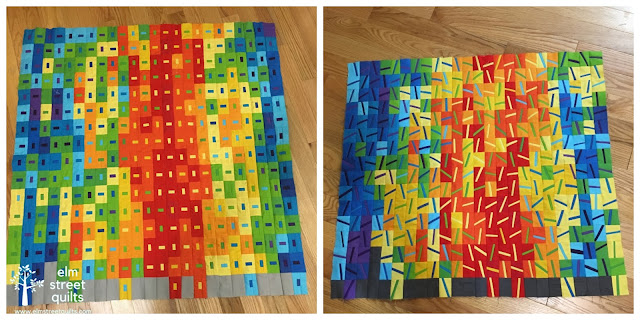
Since I used the same fabric 2 years in a row, I've really enjoyed the year to year compares - 2020 on the right and 2021 on the left.  (See the fully quilted 2020 version here.)   The compare really shows how unusually warm 2021 December was!

My flimsy is 36" x 32", 1/2 the size of the 2020 version.  I've not yet decided if I'll make another for 2022.  I've two thoughts so far - one is to just keep extending the 2021 version and end up with a 2 year quilt.  The other is make an even smaller version.


My design documents both the high and low temperature in a block which finishes 1 1/2 '' x 2''.  The improv strip is 1/4'' wide and records the low temperatures.  

Every month takes 2 columns - the 1 through 15 in first column and then 16 through end of month in the second column.  Filler blocks are added to square off the quilt.  The thin strips - 1/4'' wide - are randomly inserted and run 'vertically' for odd days and 'horizontally' for even days.

I'm using the exact same fabric that I did for my 2020 Temperature quilt.  The time I spent organizing is paying off - it takes no time at all to get the prep work done for sewing each block.  I made myself a mini-quilt to show off my temperature grid.  Oranges are 80s, yellows are 70s and sew on.  I've been asked several times what my fabrics are - I used all Painters Palette solids:
100+ is Sangria, 95+ is Real Red, 90+ is Poppy red, 85+ is Burnt Orange, 80+ is Tangerine, 75+ is Pencil Yellow, 70+ is Bright Yellow, 65+ is Apple Green, 60+ is Mint, 55+ is Bright Aqua, 50+ is Turquoise, 45+ is China Blue, 40+ is Lapis, 35+ is Purple, 30+ is Amethyst, and any temp is the 20s is Royalty.


I've written up my basic temperature quilt process in my tutorial including where I source the high and low information.  You can see my temperature quilts for 2018, 2019, and 2020!

Have a wonderful day! Patty

Monday, December 6, 2021

November Temperatures


Creating a temperature quilt is a great way to reflect back on the year.  I enjoy the process so much and teaming up with Mother Nature on a design makes things interesting.  Our NC November weather turned cold for about two weeks -just in time for me to be able to wear my quilt coat on a daily basis - and now suddenly in December, we got back to temperatures in the high 60s and low 70s.  


Where it gets really interesting is the year to year compare.  November 2021 (right) was actually much colder than November 2020 (left).  All those greens are highs in the 70s while those various shades of blue this year were highs in the 60s and 50s.


My design documents both the high and low temperature in a block which finishes 1 1/2 '' x 2''.  The improv strip is 1/4'' wide and records the low temperatures.  

Every month takes 2 columns - the 1 through 15 in first column and then 16 through end of month in the second column.  Filler blocks are added to square off the quilt.  The thin strips - 1/4'' wide - are randomly inserted and run 'vertically' for odd days and 'horizontally' for even days.

I'm using the exact same fabric that I did for my 2020 Temperature quilt.  The time I spent organizing is paying off - it takes no time at all to get the prep work done for sewing each block.  I made myself a mini-quilt to show off my temperature grid.  Oranges are 80s, yellows are 70s and sew on.  I've been asked several times what my fabrics are - I used all Painters Palette solids:
100+ is Sangria, 95+ is Real Red, 90+ is Poppy red, 85+ is Burnt Orange, 80+ is Tangerine, 75+ is Pencil Yellow, 70+ is Bright Yellow, 65+ is Apple Green, 60+ is Mint, 55+ is Bright Aqua, 50+ is Turquoise, 45+ is China Blue, 40+ is Lapis, 35+ is Purple, 30+ is Amethyst, and any temp is the 20s is Royalty.


I've written up my basic temperature quilt process in my tutorial including where I source the high and low information.  I'm looking forward to sharing the progress!  You can see my temperature quilts for 2018, 2019, and 2020!

Have a wonderful day! Patty

Friday, November 12, 2021

October Temperatures


North Carolina weather in spring and fall brings many perfect days - temps in the 70s and a deep Carolina blue sky.   This October brought us many of these days!

Temperatures definitely dropped as compared to September - the lows got lower and days that did reach the 80s (orange) didn't do so until late afternoon.  The second half of the month brought days in the 70s and a few in the 60s (green).  (The pool closed on October 3 and I'm tempted to embroidered a sad face on the block that represents that day.)


When I compare to October of 2020 (left in above photo), the number of days in each color seems about comparable with perhaps a few less highs in the 60s this year.


My design documents both the high and low temperature in a block which finishes 1 1/2 '' x 2''.  The improv strip is 1/4'' wide and records the low temperatures.  

Every month takes 2 columns - the 1 through 15 in first column and then 16 through end of month in the second column.  Filler blocks are added to square off the quilt.  The thin strips - 1/4'' wide - are randomly inserted and run 'vertically' for odd days and 'horizontally' for even days.

I'm using the exact same fabric that I did for my 2020 Temperature quilt.  The time I spent organizing is paying off - it takes no time at all to get the prep work done for sewing each block.  I made myself a mini-quilt to show off my temperature grid.  Oranges are 80s, yellows are 70s and sew on.  I've been asked several times what my fabrics are - I used all Painters Palette solids:
100+ is Sangria, 95+ is Real Red, 90+ is Poppy red, 85+ is Burnt Orange, 80+ is Tangerine, 75+ is Pencil Yellow, 70+ is Bright Yellow, 65+ is Apple Green, 60+ is Mint, 55+ is Bright Aqua, 50+ is Turquoise, 45+ is China Blue, 40+ is Lapis, 35+ is Purple, 30+ is Amethyst, and any temp is the 20s is Royalty.


I've written up my basic temperature quilt process in my tutorial including where I source the high and low information.  I'm looking forward to sharing the progress!  You can see my temperature quilts for 2018, 2019, and 2020!


Have a wonderful day! Patty

Thursday, October 7, 2021

September Termperatures


While we had some beautiful blue skies with low humidity, September also had its share of hot and humid!  (I've no complaints - I was able to swim outdoor through September and even a few days into October.)

When I compare to September of 2020, you can see there was definitely more reds (90s), oranges (80s) and fewer yellows (70s) than this month last year.  We did have a few low temperatures in the 50s - which sadly did a great job in cooling off the pool water!  (In the photo below, the first nine months of 2020 are on the left and 2021 is on the right. )


My design documents both the high and low temperature in a block which finishes 1 1/2 '' x 2''.  The improv strip is 1/4'' wide and records the low temperatures.  

Every month takes 2 columns - the 1 through 15 in first column and then 16 through end of month in the second column.  Filler blocks are added to square off the quilt.  The thin strips - 1/4'' wide - are randomly inserted and run 'vertically' for odd days and 'horizontally' for even days.

I'm using the exact same fabric that I did for my 2020 Temperature quilt.  The time I spent organizing is paying off - it takes no time at all to get the prep work done for sewing each block.  I made myself a mini-quilt to show off my temperature grid.  Oranges are 80s, yellows are 70s and sew on.  I've been asked several times what my fabrics are - I used all Painters Palette solids:
100+ is Sangria, 95+ is Real Red, 90+ is Poppy red, 85+ is Burnt Orange, 80+ is Tangerine, 75+ is Pencil Yellow, 70+ is Bright Yellow, 65+ is Apple Green, 60+ is Mint, 55+ is Bright Aqua, 50+ is Turquoise, 45+ is China Blue, 40+ is Lapis, 35+ is Purple, 30+ is Amethyst, and any temp is the 20s is Royalty.


I've written up my basic temperature quilt process in my tutorial including where I source the high and low information.  I'm looking forward to sharing the progress!  You can see my temperature quilts for 2018, 2019, and 2020!


Have a wonderful day! Patty

Thursday, September 9, 2021

August Temperatures


August was a hot and humid month!  In fact, 18 of the 31 days saw highs in the 90s (i.e. red) and lows in the 70s (i.e. yellow.)   Interestingly enough, when the calendar flipped to September 1, the humidity disappeared -  at least for now!

When I compare to August of 2020, we actually had less 90+ days than last August!   (In the photo below, the first eight months of 2020 are on the left and 2021 is on the right. )

My design documents both the high and low temperature in a block which finishes 1 1/2 '' x 2''.  The improv strip is 1/4'' wide and records the low temperatures.  

Every month takes 2 columns - the 1 through 15 in first column and then 16 through end of month in the second column.  Filler blocks are added to square off the quilt.  The thin strips - 1/4'' wide - are randomly inserted and run 'vertically' for odd days and 'horizontally' for even days.

I'm using the exact same fabric that I did for my 2020 Temperature quilt.  The time I spent organizing is paying off - it takes no time at all to get the prep work done for sewing each block.  I made myself a mini-quilt to show off my temperature grid.  Oranges are 80s, yellows are 70s and sew on.  I've been asked several times what my fabrics are - I used all Painters Palette solids:
100+ is Sangria, 95+ is Real Red, 90+ is Poppy red, 85+ is Burnt Orange, 80+ is Tangerine, 75+ is Pencil Yellow, 70+ is Bright Yellow, 65+ is Apple Green, 60+ is Mint, 55+ is Bright Aqua, 50+ is Turquoise, 45+ is China Blue, 40+ is Lapis, 35+ is Purple, 30+ is Amethyst, and any temp is the 20s is Royalty.


I've written up my basic temperature quilt process in my tutorial including where I source the high and low information.  I'm looking forward to sharing the progress!  You can see my temperature quilts for 2018, 2019, and 2020!

Have a wonderful day! Patty

Thursday, August 5, 2021

July Temperatures


Summer has arrived in full force with really, really, (really) humid days.  I continue to stay current on recording temperatures, sitting down twice a month at my machine to stitch together about two weeks worth of days at a time.  There were a lot of days this months with highs in the 90-94 range and lows in the 70-74 range so I made a lot of the red/yellow blocks.

When I compare to July of 2020, we've had more days this July in the 80s and less in the 90s.  However, although the temperature quilt doesn't record it, our humidity this year has felt higher than I can remember.  (In the photo below, the first seven months of 2020 are on the left and 2021 is on the right. )

My design documents both the high and low temperature in a block which finishes 1 1/2 '' x 2''.  The improv strip is 1/4'' wide and records the low temperatures.  

Every month takes 2 columns - the 1 through 15 in first column and then 16 through end of month in the second column.  Filler blocks are added to square off the quilt.  The thin strips - 1/4'' wide - are randomly inserted and run 'vertically' for odd days and 'horizontally' for even days.

I'm using the exact same fabric that I did for my 2020 Temperature quilt.  The time I spent organizing is paying off - it takes no time at all to get the prep work done for sewing each block.  I made myself a mini-quilt to show off my temperature grid.  Oranges are 80s, yellows are 70s and sew on.  I've been asked several times what my fabrics are - I used all Painters Palette solids:
100+ is Sangria, 95+ is Real Red, 90+ is Poppy red, 85+ is Burnt Orange, 80+ is Tangerine, 75+ is Pencil Yellow, 70+ is Bright Yellow, 65+ is Apple Green, 60+ is Mint, 55+ is Bright Aqua, 50+ is Turquoise, 45+ is China Blue, 40+ is Lapis, 35+ is Purple, 30+ is Amethyst, and any temp is the 20s is Royalty.


I've written up my basic temperature quilt process in my tutorial including where I source the high and low information.

I'm looking forward to sharing the progress!  You can see my temperature quilts for 2018, 2019, and 2020!


Have a wonderful day! Patty

Tuesday, July 6, 2021

June Temperatures


Bring on summer!  Mixed in with all the typical high humidity we've managed to have some really gorgeous days in June.

When I compare to June of 2020, we've had more days this June in the 70s and less in the 90s.  In the photo below, the first six months of 2020 are on the left and 2021 is on the right.  


My design documents both the high and low temperature in a block which finishes 1 1/2 '' x 2''.  The improv strip is 1/4'' wide and records the low temperatures.  

Every month takes 2 columns - the 1 through 15 in first column and then 16 through end of month in the second column.  Filler blocks are added to square off the quilt.  The thin strips - 1/4'' wide - are randomly inserted and run 'vertically' for odd days and 'horizontally' for even days.

I'm using the exact same fabric that I did for my 2020 Temperature quilt.  The time I spent organizing is paying off - it takes no time at all to get the prep work done for sewing each block.  I made myself a mini-quilt to show off my temperature grid.  Oranges are 80s, yellows are 70s and sew on.  I've been asked several times what my fabrics are - I used all Painters Palette solids:
100+ is Sangria, 95+ is Real Red, 90+ is Poppy red, 85+ is Burnt Orange, 80+ is Tangerine, 75+ is Pencil Yellow, 70+ is Bright Yellow, 65+ is Apple Green, 60+ is Mint, 55+ is Bright Aqua, 50+ is Turquoise, 45+ is China Blue, 40+ is Lapis, 35+ is Purple, 30+ is Amethyst, and any temp is the 20s is Royalty.


I've written up my basic temperature quilt process in my tutorial including where I source the high and low information.

I'm looking forward to sharing the progress!  You can see my temperature quilts for 2018, 2019, and 2020!

Have a wonderful day! Patty

Thursday, June 10, 2021

May Temperatures


The 80 degree days have arrived!

My design documents both the high and low temperature in a block which finishes 1 1/2 '' x 2''.  The improv strip is 1/4'' wide and records the low temperatures.  

Here is a comparison of the first five months of 2020 (left) and 2021 (right).  While the first 3 months of 2021 were definitely colder than 2020, the month of May was warmer - 2021 had many more days in the 80s (orange) and 70s (yellow).  These were low humidity (for North Carolina) days so reasonably pleasant.


Every month takes 2 columns - the 1 through 15 in first column and then 16 through end of month in the second column.  Filler blocks are added to square off the quilt.  The thin strips - 1/4'' wide - are randomly inserted and run 'vertically' for odd days and 'horizontally' for even days.

I'm using the exact same fabric that I did for my 2020 Temperature quilt.  The time I spent organizing is paying off - it takes no time at all to get the prep work done for sewing each block.

I made myself a mini-quilt to show off my temperature grid.  Oranges are 80s, yellows are 70s and sew on....


I've written up my basic temperature quilt process in my tutorial including where I source the high and low information.

I'm looking forward to sharing the progress!  You can see my temperature quilts for 2018, 2019, and 2020!

Have a wonderful day! Patty

Wednesday, May 12, 2021

April Temperatures


April brought a whole bunch of different temperatures to North Carolina - we had days with highs in the upper 80s (with not too bad humidity!) plus days with highs in the 50s and then everything else in between!

My design documents both the high and low temperature in a block which finishes 1 1/2 '' x 2''.  The improv strip is 1/4'' wide and records the low temperatures.  

Here is a comparison of the first four months of 2020 (left) and 2021 (right).  While the first 3months of 2021 were definitely colder - the month of April seemed to be about the same a mix of green, yellow, orange, and a splash of blue!

Every month takes 2 columns - the 1 through 15 in first column and then 16 through end of month in the second column.  Filler blocks are added to square off the quilt.  The thin strips - 1/4'' wide - are randomly inserted and run 'vertically' for odd days and 'horizontally' for even days.

I'm using the exact same fabric that I did for my 2020 Temperature quilt.  The time I spent organizing is paying off - it takes no time at all to get the prep work done for sewing each block.

I made myself a mini-quilt to show off my temperature grid.  Oranges are 80s, yellows are 70s and sew on....


I've written up my basic temperature quilt process in my tutorial including where I source the high and low information.

I'm looking forward to sharing the progress!  You can see my temperature quilts for 2018, 2019, and 2020!

Have a wonderful day! Patty

Thursday, April 22, 2021

2020 Temperature Quilt is Done!


I am so happy with my 2020 Temperature Quilt finish!  I used my walking foot to do straight line quilting which ended up about 1/4'' spacing.  I was tempted to do even more quilting since I really like densely quilted quilts!

I used a collection of Aurifil threads in colors that coordinated with the fabrics.  While I concentrated the red in the middle - for example - I also brought some of the thread color into the colder months.


Before I started the quilting, I actually changed out the gray filler blocks to a darker gray and am so happy I did so as the darker gray works better with the saturated colors in the rest of the quilt.  (Below see the version with the light gray filler blocks.) 


I had a rainbow ombre piece of fabric in my stash which worked perfect for the back.  The back really shows off the quilting too!  I chose a binding that matched the gray filler pieces and  added the temperature scale down the bottom.  I love the way this looks. 


Since I'm making another quilt for 2021 using the same color palette, I decided a small mini was in order for the color key!


See my 2021 temperature quilt work in progress here.

Have a wonderful day! Patty

Wednesday, April 7, 2021

March Temperatures


My design documents both the high and low temperature in a block which finishes 1 1/2 '' x 2''.  The improv strip is 1/4'' wide and records the low temperatures.  

Here is a comparison of the first three months of 2020 (left) and 2021 (right).  The first three months of 2021 were definitely colder - all those blues and only one day in the low 80s (light orange).

Every month takes 2 columns - the 1 through 15 in first column and then 16 through end of month in the second column.  Filler blocks are added to square off the quilt.  The thin strips - 1/4'' wide - are randomly inserted and run 'vertically' for odd days and 'horizontally' for even days.

I'm using the exact same fabric that I did for my 2020 Temperature quilt - in fact, I first seam ripped all the prepared strip sets so I can use them for this quilt.  I've just now got them all organized off the design wall and into sandwich bags which should speed up the process in creating new blocks.   


I've written up my basic temperature quilt process in my tutorial including where I source the high and low information.

I'm looking forward to sharing the progress!  You can see my temperature quilts for 2018, 2019, and 2020!


Have a wonderful day! Patty

Friday, March 5, 2021

Temperature Quilt 2021

I've started to assemble the backing and am getting ready to baste my 2020 temperature quilt.  This quilt currently measures 48'' x 48'' although I am debating switching out the light gray filler blocks for a darker gray and then framing the quilt in that darker gray,


Since I really enjoyed making a temperature quilt last year (and in 2019 and 2018), I've decided to do it again using the exact same color palette as last year.  My very first step for 2021's quilt was to seam rip all my strip sets! 


My new design will also document both the high and low temperature but my new design uses a smaller block (1 1/2 '' x 2'' finished) and has a bit more of an improv nature to it.  

Here is a comparison of the first two months of 2020 and 2021  -


Ignore the fact that 2021 is pressed better and is actually all sewn together!  By this point in 2020, I wasn't quite sure where I was headed.  

Do notice how 2021 was much colder  - all that blue and purple - than 2020 was?

Every month takes 2 columns - the 1 through 15 in first column and then 16 through end of month in the second column.  Filler blocks are added to square off the quilt.  The thin strips - 1/4'' wide - are randomly inserted and run 'vertically' for odd days and 'horizontally' for even days.

I've written up my basic temperature quilt process in my tutorial including where I source the high and low information.

I'm looking forward to sharing the progress!


Have a wonderful day! Patty

Monday, January 4, 2021

2020 Temperature Quilt Flimsy

And it is a wrap!

2020 is behind us and the high and low temperatures of each day throughout the year here in central NC is forever recorded in fabric.


Each month is represented across two columns.  all that orange and red in the center is clearly the hot Carolina summer while the blues on the edges are highs in the 40s & 50s.  We had one day were the temperature stayed in the 30s all day - the purple block in the upper right corner.  No days with temps 100 or above and no lows in the teens.

This was so much fun that I think I'll do another for 2021 - different block design but same color palette.  I've got plenty of fabric left in all colors but one so I'm good to go!

All the fabrics are Paintbrush Studios - such deep saturated colors which were perfect for this project.


The 2020 version was my 3rd year of making a temperature quilt and I can't stop now!  But next step is to quilt it - I've got a plan and need some thread.  :-)

You can read more about the design here.  The net is the 2020 quilt will be functionally sized at 48'' x 48''.   The quilt records both high and low temperatures for each day.   The block is a simple one - the low temperature is the smaller rectangle - vertical for odd numbered days and horizontal for even numbered.  


The fabrics are all Painters Palette solids and I keep the color gradient at the top of my design wall so it is always available to reference.  

I've made temperature quilts for 2018 and 2019.  Want to make your own temperature quilt - check out my tutorial!

Have a wonderful day! Patty